
🎵
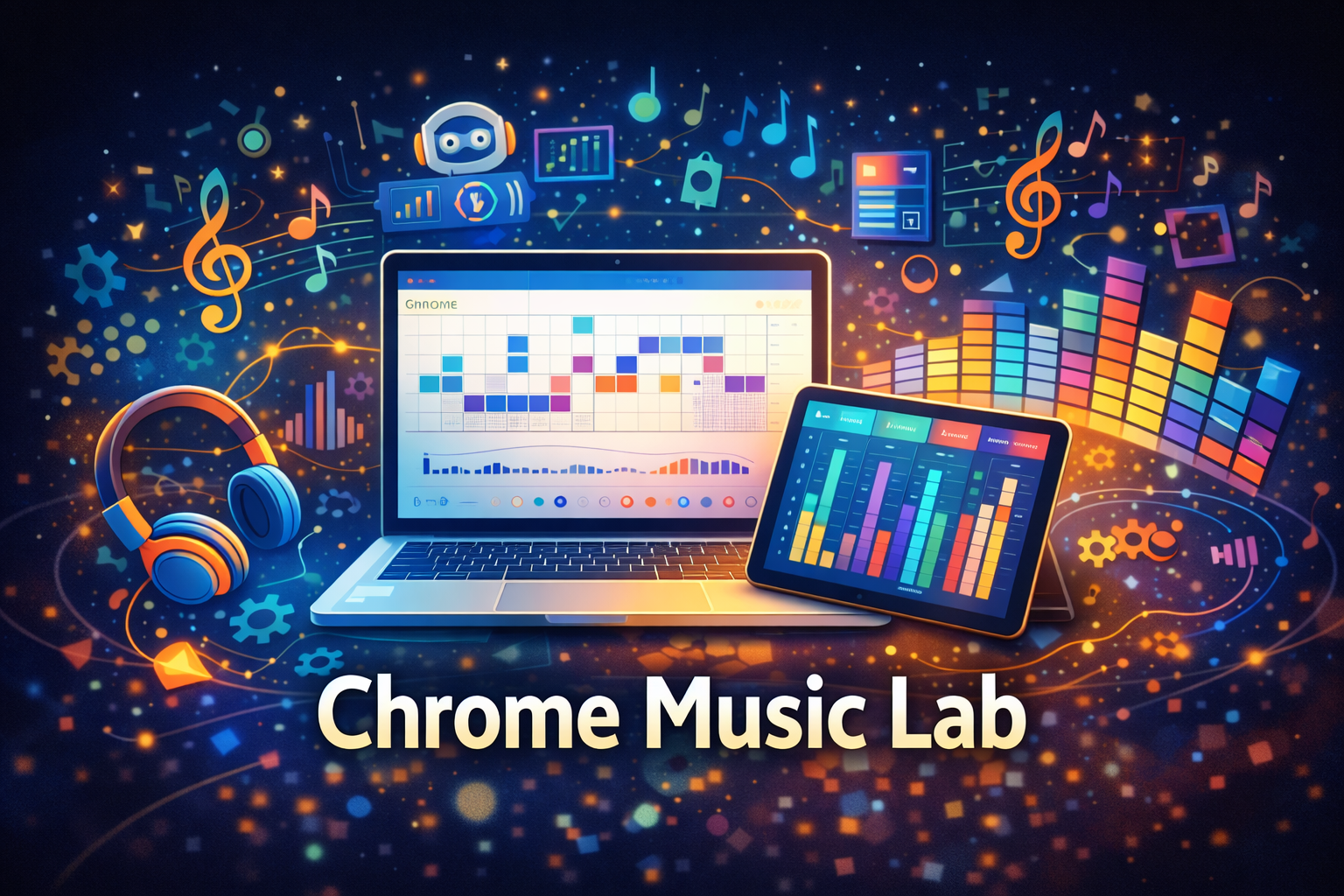
Music education is evolving fast, and one of the most powerful tools leading this transformation is Chrome Music Lab. Designed by Google, Chrome Music Lab makes learning music interactive, visual, and fun—no instruments, no prior experience, and no pressure.
Whether you’re a student, teacher, parent, content creator, or lifelong learner, Chrome Music Lab proves that anyone can explore rhythm, melody, harmony, and sound through play.
In this in-depth guide, we explore what Chrome Music Lab is, how it works, why it’s so effective, and how you can use it for education, creativity, and even productivity.
📌 Featured Image (Top of Article)
4
Alt text: Chrome Music Lab interactive music learning tool
Caption: Chrome Music Lab turns music theory into hands-on creativity
🎧 What Is Chrome Music Lab?
Chrome Music Lab is a free, web-based music learning platform created by Google. It uses simple interactive experiments to teach core musical concepts such as:
- Rhythm
- Melody
- Harmony
- Tempo
- Timbre
- Sound waves
You don’t need to download anything. You don’t even need musical training. If you can click, tap, or drag—you can make music.
🔗 Official site: https://musiclab.chromeexperiments.com
🧠 Why Chrome Music Lab Is So Popular
Chrome Music Lab succeeds because it blends education, creativity, and technology seamlessly.
Key Reasons for Its Popularity:
- Completely free
- Works on any modern browser
- Kid-friendly and adult-friendly
- No sign-up required
- Visual and interactive learning
- Encourages experimentation
Unlike traditional music education tools, Chrome Music Lab removes fear and replaces it with curiosity and play.
🎼 Chrome Music Lab Experiments Explained
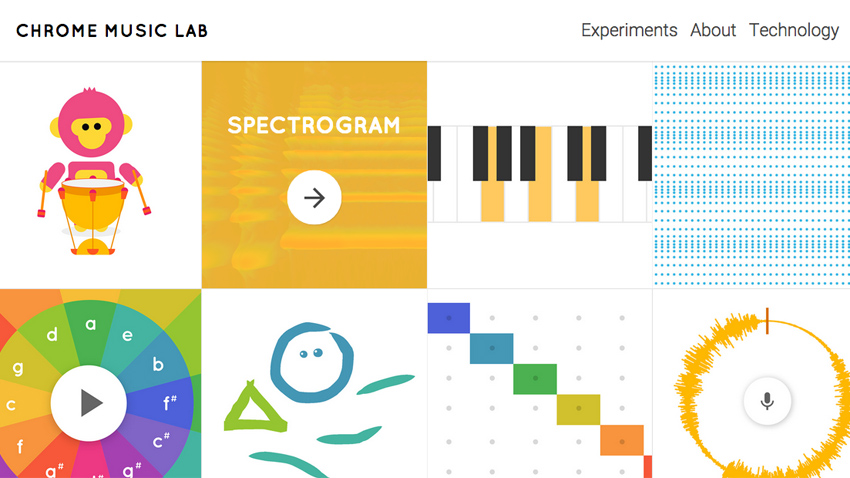
Chrome Music Lab is made up of several small “experiments,” each focusing on a specific musical concept.
🎹 1. Song Maker
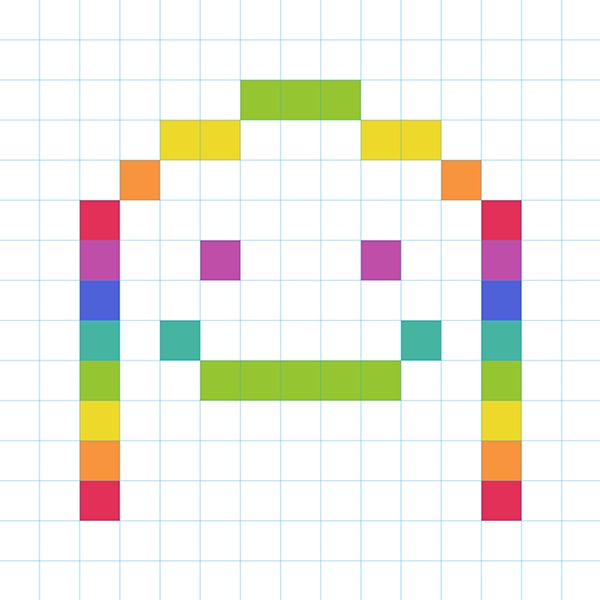
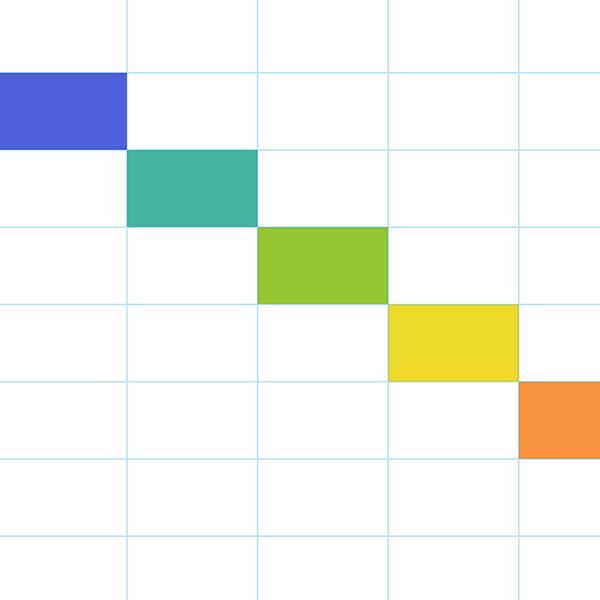
Song Maker allows users to create melodies by placing notes on a grid.
What you learn:
- Pitch
- Rhythm
- Tempo
- Musical patterns
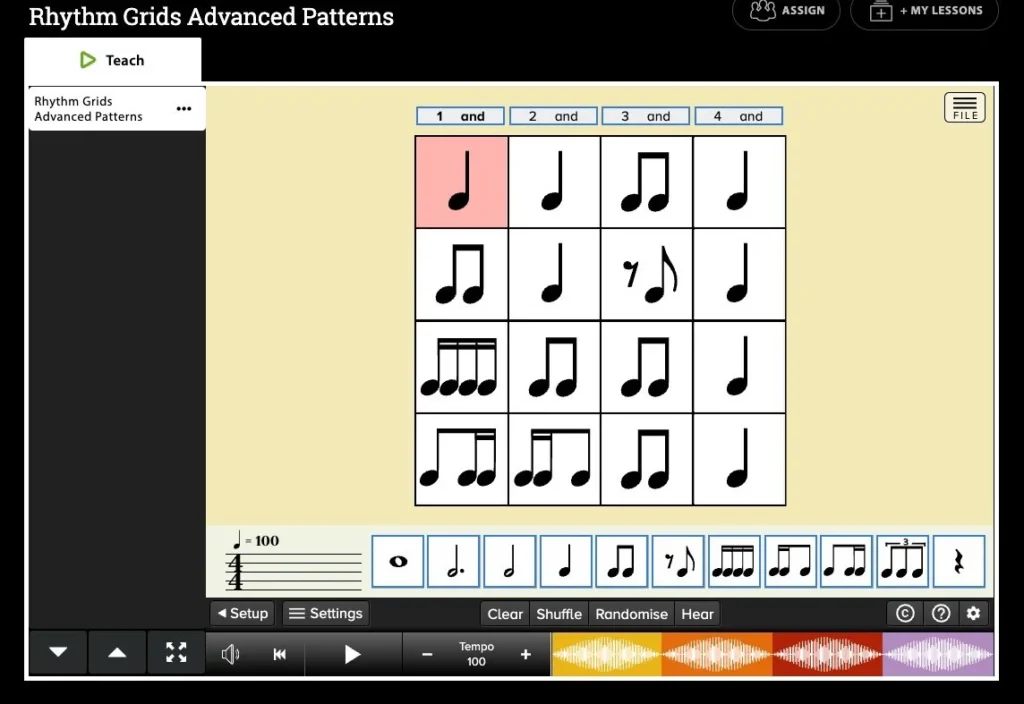
Teachers often use Song Maker to introduce students to composition without needing instruments.
🥁 2. Rhythm
Rhythm uses animated characters to demonstrate beat and timing.
Skills developed:
- Timing
- Counting
- Percussion basics
It’s especially effective for younger learners.
🌊 3. Sound Waves
This experiment visualizes sound frequencies and waveforms.
Concepts covered:
- Frequency
- Amplitude
- Pitch vs volume
It’s a perfect bridge between music and science.
🎻 4. Spectrogram
Spectrogram lets users see sound in real time.
Great for:
- Understanding timbre
- Exploring voice and instruments
- Audio visualization
🎶 5. Melody Maker
Melody Maker focuses on pitch and scale.
It helps users understand:
- Musical scales
- Note relationships
- Harmonic movement
🧪 Other Experiments Include:
- Arpeggios
- Kandinsky (sound + art)
- Oscillators
- Chords
Each experiment is short, engaging, and intuitive.
📚 How Chrome Music Lab Helps in Education
Chrome Music Lab is widely used in classrooms around the world.
Benefits for Teachers:
- No setup time
- Works on school devices
- Supports STEM & STEAM learning
- Encourages collaboration
- Inclusive for all learning levels
Teachers use Chrome Music Lab to:
- Introduce music theory
- Support creative expression
- Combine music with math and science
👉 Related read on educational innovation:
How AI Is Transforming Learning Tools
https://www.checkthetrend.com/ai-in-education-tools/
👨👩👧 Chrome Music Lab for Kids
Kids love Chrome Music Lab because it feels like a game—but it’s secretly teaching them powerful skills.
Skills Children Develop:
- Pattern recognition
- Motor coordination
- Listening skills
- Creativity and confidence
Parents can safely allow children to explore without worrying about ads or unsafe content.
🎓 Chrome Music Lab for Teachers
Chrome Music Lab is aligned with modern learning goals:
- Inquiry-based learning
- Project-based learning
- Digital literacy
- Creative problem solving
Teachers often assign:
- Song composition tasks
- Rhythm challenges
- Sound exploration activities
👉 You may also like:
Best Educational Games for Brain Development
🎧 Chrome Music Lab for Adults & Creators
Chrome Music Lab isn’t just for kids.
Adults use it to:
- Brainstorm melodies
- Understand music theory basics
- Teach online classes
- Relax and experiment creatively
Many musicians use it as a low-pressure sketchpad before moving ideas into professional software.
🧠 The Science Behind Chrome Music Lab
Chrome Music Lab works because it taps into multisensory learning.
You:
- See music
- Hear music
- Interact with music
This combination strengthens memory and understanding far more than passive learning.
Studies show that visual + auditory learning increases retention by up to 65%.
🎯 Chrome Music Lab and Creativity
One of the biggest strengths of Chrome Music Lab is how it removes fear.
There are:
- No wrong notes
- No grades
- No pressure
This makes it ideal for:
- Creative confidence
- Exploration
- Experimentation
👉 Related insight:
How Digital Creativity Tools Are Changing Education
🔧 Chrome Music Lab vs Traditional Music Tools
| Feature | Chrome Music Lab | Traditional Tools |
|---|---|---|
| Cost | Free | Often expensive |
| Setup | None | Instruments/software |
| Skill barrier | Very low | Medium–high |
| Creativity | High | Varies |
| Accessibility | Universal | Limited |
Chrome Music Lab isn’t meant to replace instruments—it opens the door.
🌍 Accessibility & Inclusion
Chrome Music Lab is:
- Language-neutral
- Device-agnostic
- Friendly for neurodiverse learners
It supports inclusive education by allowing everyone to participate equally.
📌 Use Cases Beyond Education
Chrome Music Lab is also used for:
- Music therapy
- Team creativity sessions
- Ice-breakers
- Online workshops
- Content creation
🛠 Tips for Using Chrome Music Lab Effectively
- Start with Song Maker
- Encourage experimentation
- Combine with storytelling
- Share compositions
- Connect music with emotions
🔗 External Authority Links
🔗 Internal Links (Add Naturally)
Use these anchors inside the article:
🧩 Final Thoughts
Chrome Music Lab proves that learning music doesn’t require expensive tools or years of training. With curiosity, creativity, and a browser, anyone can explore the building blocks of sound.
In a world where creativity is becoming as important as technical skill, Chrome Music Lab stands out as one of the most accessible and powerful learning tools available today.