
Latest Trump News Analysis: Trade Policy, Market Volatility, and the 2026 Economic Outlook
The latest Trump news is once again putting global markets on edge, reigniting debates about trade, tariffs, and America’s economic positioning in an increasingly fragmented global system. From renewed tariff discussions to aggressive trade positioning toward China and emerging economies, investors are watching closely for signals that could reshape supply chains, inflation trends, capital flows, and currency dynamics. Markets are highly sensitive to policy direction, and even preliminary statements can trigger immediate reactions across equities, commodities, bonds, and foreign exchange markets.
Forex News Today — February 24, 2026 (Analysis + Gaps in Coverage)
Trade policy under President Trump has historically carried significant market consequences, particularly during earlier rounds of US-China tariff escalation. Investors remember how quickly supply chains were disrupted, how corporate profit margins were pressured, and how volatility surged in global stock indices. As a result, the mere possibility of expanded tariffs or broader trade restrictions introduces uncertainty that financial markets tend to price in rapidly. Traders are not only analyzing what is being proposed but also attempting to forecast the potential ripple effects across global manufacturing hubs, export-driven economies, and multinational corporations.
At the core of current concerns lies the impact on inflation and interest rate expectations. Tariffs effectively function as a tax on imported goods, raising input costs for domestic producers and, in many cases, final prices for consumers. If trade restrictions increase costs across critical sectors such as technology, automotive, or consumer goods, inflationary pressures could re-emerge. This would directly influence Federal Reserve policy expectations, bond yields, and ultimately the strength or weakness of the US dollar. In financial markets, inflation expectations are often more powerful than the inflation data itself, and policy shifts tied to trade strategy can alter those expectations quickly.
Beyond the United States, global investors are assessing how China and other export-dependent economies might respond. China could counter with retaliatory tariffs, targeted regulatory measures, or currency adjustments designed to offset economic pressure. Emerging economies that rely heavily on trade access to the United States may also face currency volatility and capital outflows if uncertainty intensifies. As history has shown, trade disputes rarely remain bilateral; they tend to reverberate across continents through interconnected supply chains and investment flows.
In this environment, markets are not reacting to isolated political headlines but to the broader question of economic direction. If President Trump moves forward decisively on new trade measures, the consequences could extend far beyond short-term volatility. Investors are therefore positioning cautiously, balancing opportunity with risk as they navigate a renewed era of geopolitical and economic uncertainty.
🌍 What’s Driving the Market Reaction?
Recent statements indicate a firmer stance on international trade, particularly targeting China and several emerging manufacturing economies that compete directly with U.S. industrial sectors. Financial markets respond quickly to this type of rhetoric because trade policy is not just political positioning — it is economic policy with measurable consequences. When tariffs, trade restrictions, or import controls are discussed, investors immediately reassess global growth projections, inflation risks, and capital allocation strategies.

Trade policy influences multiple layers of the economy simultaneously. First, it directly impacts import and export flows, altering the balance of goods moving across borders. If tariffs rise, import volumes can decline while domestic producers may attempt to fill the gap, often at higher production costs. This shift can disrupt supply chains that have taken decades to optimize globally.
U.S. Trade Representative (USTR): Check Data
U.S. Bureau of Economic Analysis (International Trade Data): Check Data
U.S. Census Bureau Trade Statistics:
Second, corporate earnings expectations adjust rapidly. Multinational companies with heavy exposure to overseas manufacturing or global consumer markets may face margin compression if costs rise or retaliatory tariffs are imposed. Equity markets often react before official policy is even enacted because forward earnings guidance becomes uncertain.

Third, inflation levels can be influenced by tariff implementation. Tariffs effectively act as a consumption tax on imported goods, and businesses frequently pass increased costs on to consumers. This dynamic may feed into broader inflation trends, influencing Federal Reserve rate policy.
Source: U.S. Inflation Data (BLS CPI)
Fourth, currency markets are particularly sensitive to trade policy developments. A more protectionist stance can initially strengthen the U.S. dollar due to safe-haven demand. However, if inflation rises and economic growth slows, the long-term currency impact becomes more complex. Emerging market currencies may weaken if trade access becomes restricted, especially in export-dependent economies.
Fifth, commodity demand is directly linked to trade flows. Reduced global manufacturing activity could dampen demand for industrial commodities such as copper and oil, while heightened geopolitical tension often supports gold prices.
Source: Gold (XAU/USD)
Source: Crude Oil (WTI):

📊 The Bigger Picture
Markets do not wait for legislation to pass; they price in expectations. If investors believe trade tensions will escalate, capital may rotate toward defensive assets, bond yields may fluctuate, and equity sectors such as technology and industrials may experience heightened volatility. On the other hand, if negotiations soften or compromises emerge, risk assets could rally sharply.

Ultimately, what drives the market reaction is not simply the announcement itself but the anticipated ripple effects across growth, inflation, corporate earnings, and monetary policy. Trade policy sits at the intersection of geopolitics and macroeconomics, and that intersection is where volatility is born.
📊 If Trump Moves Forward on Tariffs — What Happens to the US Economy?
The possibility of renewed or expanded tariffs under President Trump is not just a political talking point — it is a macroeconomic catalyst capable of reshaping inflation trends, currency strength, bond markets, corporate earnings, and global capital flows. Trade policy sits at the center of economic transmission mechanisms, and when tariffs are introduced or increased, the effects ripple across nearly every asset class.
If tariffs are implemented on imported goods — especially from major trading partners like China — the consequences will likely unfold in stages. Some effects will appear immediately in financial markets, while others may develop gradually through supply chains and consumer pricing structures.
Let’s break this down systematically.
1️⃣ Inflation Pressure — The First Transmission Channel
Higher tariffs increase the cost of imported goods. When American businesses rely on foreign components — whether in electronics, automotive manufacturing, machinery, or consumer goods — those higher costs do not simply disappear. They either reduce corporate margins or get passed along to consumers.

If companies pass those increased input costs to consumers:
- Inflation rises
- Consumer purchasing power weakens
- The Federal Reserve may delay interest rate cuts
- Bond yields may climb
🔗 US Inflation Data (CPI – Bureau of Labor Statistics):
https://www.bls.gov/cpi/
🔗 Producer Price Index (PPI):
https://www.bls.gov/ppi/
During previous trade escalations, research showed that a significant portion of tariff costs was ultimately borne by domestic businesses and consumers rather than foreign exporters. This is important because inflation is not merely a price statistic — it directly influences monetary policy.

If tariff-driven inflation persists, the Federal Reserve may:
- Maintain higher interest rates for longer
- Delay easing cycles
- Tighten financial conditions
🔗 Federal Reserve Monetary Policy Statements:
https://www.federalreserve.gov/monetarypolicy.htm
Higher rates increase borrowing costs across mortgages, credit cards, and business loans, potentially slowing economic growth.
2️⃣ Bond Market Reaction — The Silent Indicator
When inflation expectations rise, bond markets react quickly. Investors demand higher yields to compensate for expected price increases.
🔗 US 10-Year Treasury Yield:
If tariffs push inflation higher:
- Treasury yields may climb
- Government borrowing becomes more expensive
- Corporate debt costs rise
- Equity valuations may compress
However, if markets fear economic slowdown due to trade restrictions, bond yields could paradoxically fall as investors seek safety in Treasuries. This creates a tug-of-war between inflation risk and growth risk.
Bond markets often provide earlier signals than equity markets.
3️⃣ Corporate Earnings & Business Investment
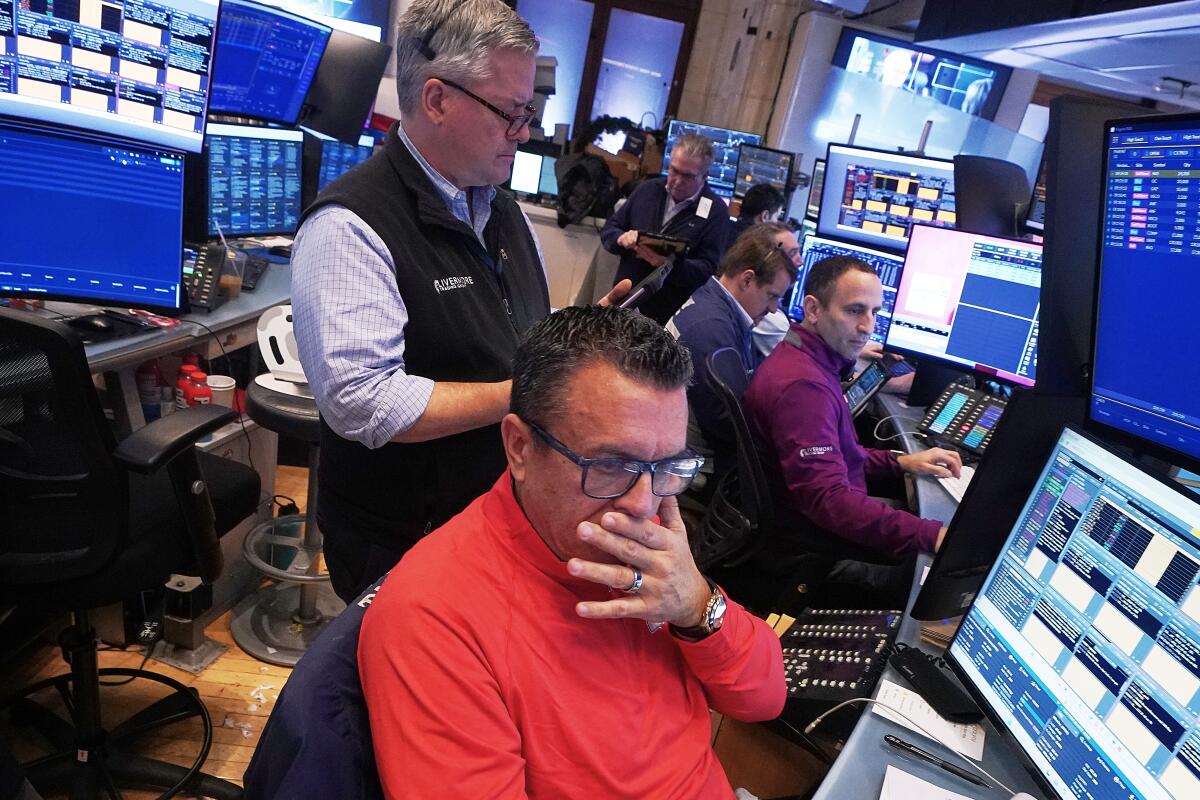
Tariffs influence corporate decision-making. Multinational companies operating across global supply chains may face:
- Higher production costs
- Reduced export access
- Currency volatility
- Retaliatory tariffs
🔗 US Corporate Earnings Data (SEC Filings):
https://www.sec.gov/edgar.shtml

Technology firms, automotive manufacturers, and retail chains could be especially vulnerable if supply chains depend heavily on imports. Reduced corporate profitability can translate into:
- Slower hiring
- Reduced capital expenditure
- Lower stock buybacks
- Increased market volatility
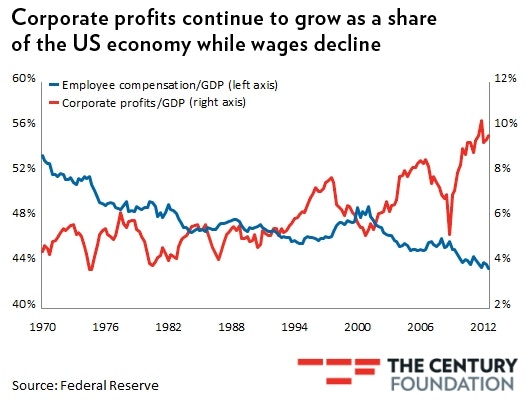
This is why stock markets tend to react sharply to trade rhetoric even before policy is enacted.
4️⃣ Stronger or Weaker Dollar? — A Complex Currency Equation

This is where the analysis becomes more nuanced.
A tougher trade stance could strengthen the U.S. dollar in the short term because:
- Investors move toward safe-haven assets
- Global uncertainty increases
- Capital flows into U.S. Treasuries
However, the long-term impact could be different.
If tariffs:
- Drive sustained inflation
- Slow economic growth
- Reduce global trade volumes
Then the dollar could weaken over time due to:
- Lower growth expectations
- Diminished capital inflows
- Reduced export competitiveness
Markets often react emotionally first — pricing in fear or optimism — before reassessing economic fundamentals.

Currency markets are forward-looking and tend to anticipate how trade policy will affect interest rate differentials and capital flows.
5️⃣ Consumer Impact — The Hidden Pressure Point
Higher import costs translate directly into household budgets. Everyday goods such as electronics, apparel, appliances, and automobiles may become more expensive.
If inflation rises while wage growth stagnates:
- Real purchasing power declines
- Consumer confidence weakens
- Retail sales may slow
🔗 US Retail Sales Data:
https://www.census.gov/retail/index.html
Consumer spending accounts for a significant portion of U.S. GDP. If tariffs erode purchasing power, broader economic momentum could weaken.
6️⃣ What About Emerging Markets & China?

4
If tariffs specifically target Chinese exports, the effects could include:
- Slower Chinese manufacturing output
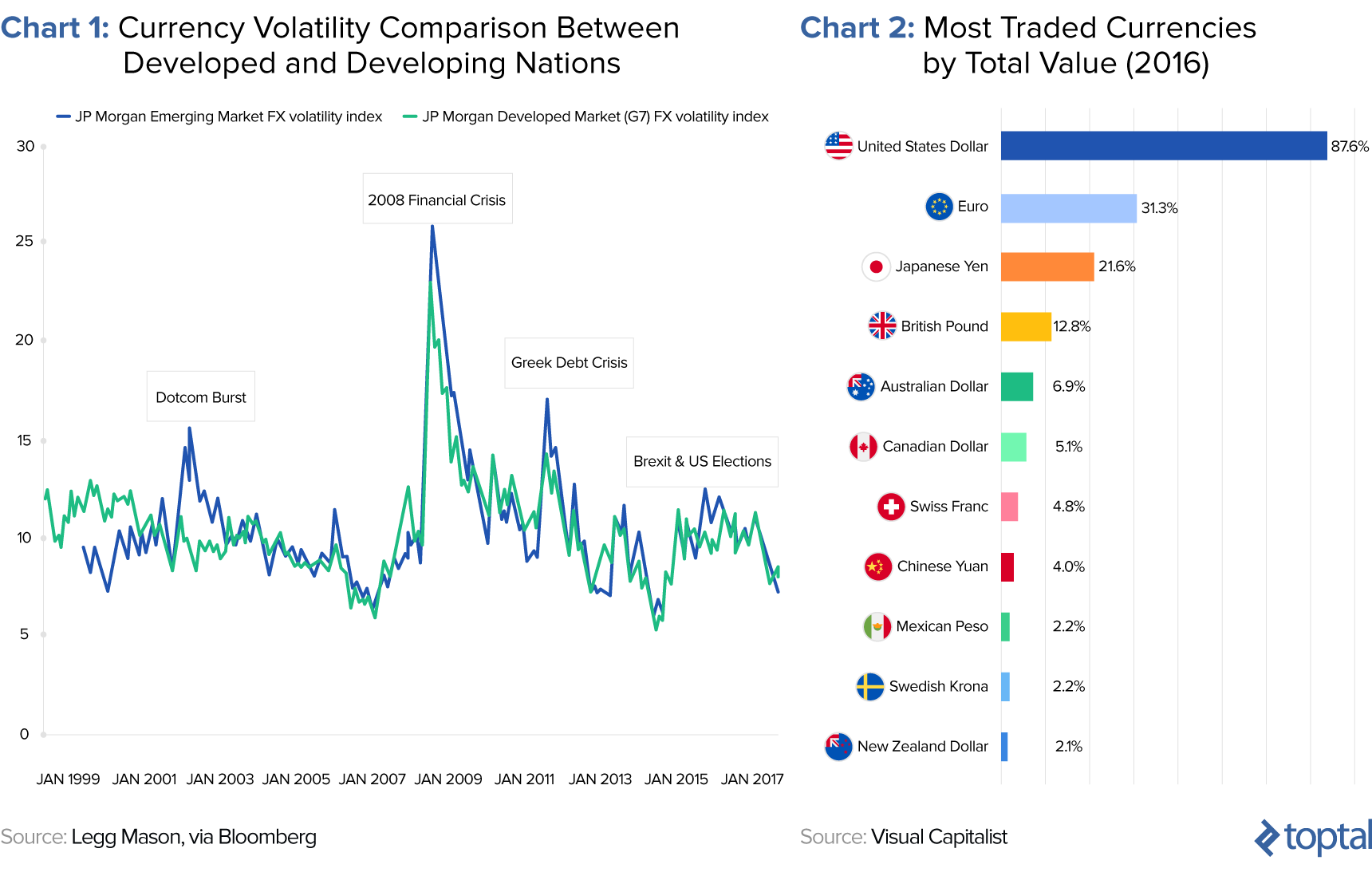
- Yuan volatility
- Potential retaliatory measures
🔗 China Economic Data (National Bureau of Statistics):
Emerging markets that rely heavily on export access to the U.S. could also face currency depreciation and capital outflows. A stronger dollar environment often pressures emerging market debt, particularly where liabilities are dollar-denominated.
7️⃣ Equity Market Volatility & Sector Rotation
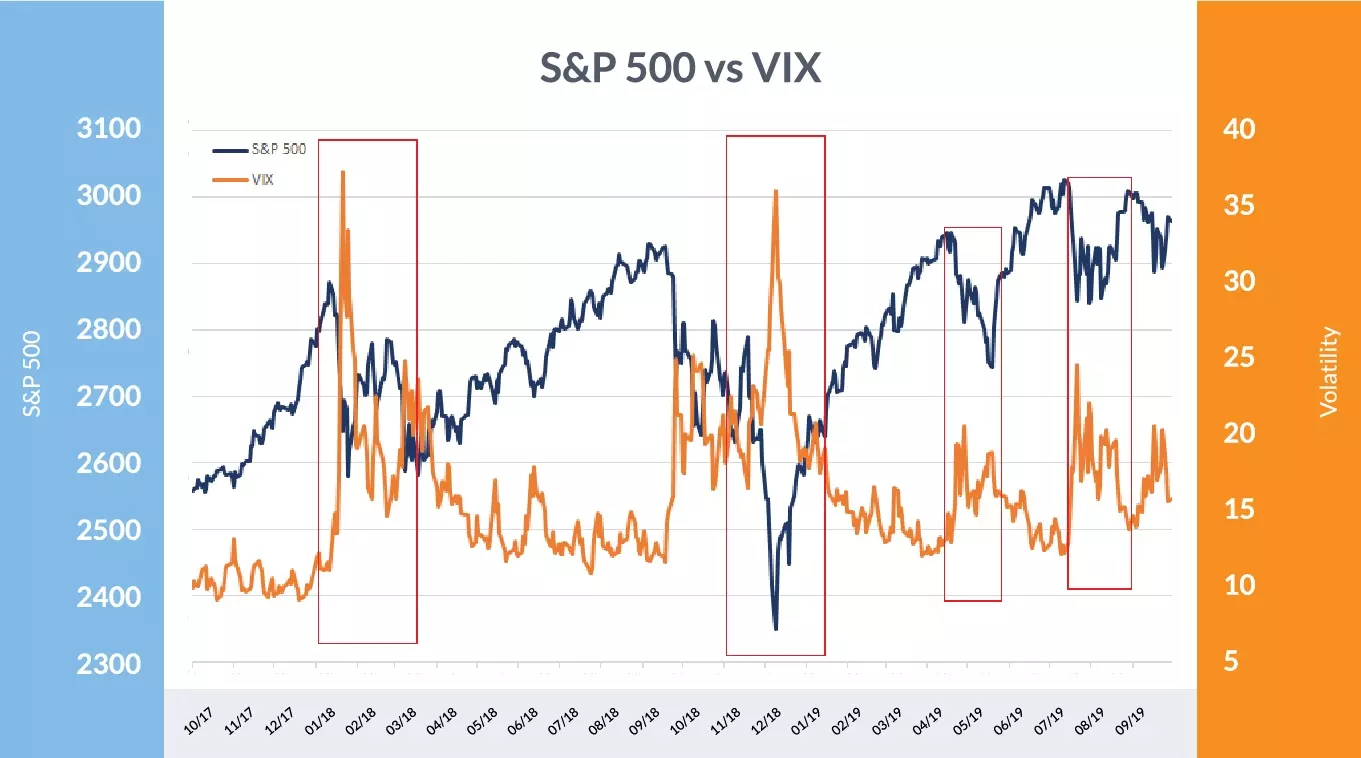
Historically, trade tensions have triggered:
- Stock market sell-offs
- Increased volatility (VIX spikes)
- Rotation into defensive sectors
- Safe-haven demand for gold
🔗 S&P 500 Live Chart:
https://www.cnbc.com/quotes/.SPX

🔗 Gold (XAU/USD):
https://www.investing.com/currencies/xau-usd
Gold often benefits during periods of geopolitical and trade uncertainty.
8️⃣ The Long-Term Structural Shift
If tariffs remain elevated for an extended period, global supply chains may permanently shift. Companies may relocate production to:
- Mexico
- Vietnam
- India
- Other lower-cost economies
Such restructuring can take years but may redefine trade patterns and geopolitical alliances.

🎯 Final Assessment
If President Trump moves forward aggressively on tariffs:
Short-Term Effects
- Market volatility spikes
- USD strengthens (safe-haven flows)
- Equities fluctuate
- Gold may rally
Medium-Term Effects
- Inflation pressure builds
- Federal Reserve policy path shifts
- Corporate margins compress
Long-Term Effects
- Supply chain realignment
- Potential slower global growth
- Currency volatility across emerging markets
The real economic outcome depends on:
- Scale of tariff implementation
- International response
- Federal Reserve policy reaction
- Consumer resilience
Trade policy is not just a headline — it is an economic lever with measurable macro consequences.
🇨🇳 What About China?
If New U.S. Tariffs Target Chinese Exports — Economic Shockwaves, Yuan Volatility & Global Trade Realignment
When discussions about renewed U.S. tariffs intensify, one of the most immediate global focal points becomes China. As the world’s second-largest economy and a dominant force in global manufacturing, China sits at the center of international supply chains. Any significant tariff action targeting Chinese exports would not remain bilateral; it would ripple through financial markets, commodity prices, currency valuations, and emerging economies.
To understand the full implications, we must analyze what could realistically happen across multiple layers of the Chinese economy — and how Beijing might respond.
📊 China’s Manufacturing Sector — The First Pressure Point

If new tariffs specifically target Chinese exports to the United States, the immediate concern would be a slowdown in manufacturing activity. China’s export engine remains a vital driver of GDP, employment, and industrial output. Tariffs raise the effective cost of Chinese goods entering the U.S., reducing competitiveness in price-sensitive markets.
🔗 China National Bureau of Statistics (Official Data):
🔗 China Manufacturing PMI (Caixin):
A decline in export orders could lead to:
- Lower factory output
- Reduced employment in export-heavy provinces
- Pressure on industrial profits
- Slower GDP growth

China’s coastal manufacturing hubs — particularly Guangdong, Zhejiang, and Jiangsu — could feel disproportionate pressure if U.S. demand softens significantly.

However, China’s economy today is more diversified than during earlier trade disputes. Domestic consumption, technology investment, and infrastructure spending have grown as stabilizing pillars. Still, export-oriented sectors remain sensitive to U.S. trade access.
💱 Yuan (CNY) Volatility — Currency as a Shock Absorber

When trade tensions rise, the Chinese yuan (CNY) often becomes a focal point for global markets. Currency depreciation can partially offset tariff effects by making exports cheaper in foreign markets.
If tariffs intensify:
- USD/CNY could rise
- The yuan may weaken
- Capital outflow risks may increase
🔗 People’s Bank of China (PBoC):

However, China manages its currency within a controlled framework. The People’s Bank of China sets daily reference rates and may intervene to limit excessive volatility. A sharp yuan depreciation could:
- Trigger capital flight
- Increase debt servicing costs for dollar-denominated liabilities
- Spark broader emerging market currency pressure
China must balance competitiveness with financial stability.
🌍 Global Supply Chain Adjustments

If tariffs persist or expand, multinational corporations may accelerate supply chain diversification. This process — sometimes called “China Plus One” — involves shifting portions of production to countries like:
- Vietnam
- India
- Mexico
- Indonesia
While this reduces dependency on China, supply chain relocation is expensive and complex. Infrastructure, workforce skill levels, regulatory stability, and logistical networks all matter.
Over time, a structural shift in global production networks could:
- Reduce China’s export share in certain sectors
- Boost manufacturing in Southeast Asia
- Alter global commodity demand patterns
But such transitions take years, not months.
🛑 How Could China Respond?
If new U.S. tariffs target Chinese goods, Beijing has multiple policy levers available.
1️⃣ Counter-Tariffs
China could impose retaliatory tariffs on U.S. agricultural goods, technology products, or industrial equipment. Previous trade rounds demonstrated how quickly tit-for-tat measures can escalate.
Retaliation often impacts politically sensitive sectors, amplifying domestic pressures on both sides.
2️⃣ Currency Adjustments
A gradual yuan depreciation can soften the blow of tariffs by making exports more competitive globally. However, excessive depreciation risks:
- Capital outflows
- Financial instability
- Investor confidence erosion
China’s policymakers typically prefer controlled, gradual adjustments rather than abrupt moves.
3️⃣ Export Incentives & Fiscal Stimulus
China could introduce:
- Tax rebates for exporters
- Credit support for manufacturers
- Infrastructure investment programs
Such fiscal measures could cushion domestic economic slowdown.
🔗 China Fiscal Policy Updates (Ministry of Finance):
Stimulus spending may also boost demand for commodities such as copper, iron ore, and energy.
4️⃣ Trade Diversification
China has actively expanded trade relationships through initiatives such as:
- The Regional Comprehensive Economic Partnership (RCEP)
- Belt and Road Initiative (BRI)
By strengthening trade ties with Asia, Africa, and Latin America, China can partially offset reduced U.S. export access.
📈 Commodity Market Implications

4
China is a major consumer of industrial commodities. If manufacturing slows:
- Copper demand may weaken
- Iron ore imports may decline
- Oil demand projections may soften

On the other hand, heightened geopolitical tensions often boost gold demand as a safe-haven asset.
Commodity-exporting emerging markets such as Brazil, Australia, and South Africa may feel secondary effects.
🌐 Emerging Market Ripple Effects
If U.S.-China trade friction intensifies:
- Emerging market currencies may weaken
- Capital may flow toward safe-haven assets
- Sovereign bond spreads could widen
Countries deeply integrated into Chinese supply chains may experience volatility in export revenues and foreign investment.
Trade disputes rarely stay isolated; they propagate through interconnected financial systems.
⚖️ Could This Escalate into Broader Trade Friction?
Escalation depends on:
- Scope of tariff implementation
- Diplomatic negotiation channels
- Global economic conditions
If both sides adopt aggressive retaliatory measures, the result could resemble earlier trade war cycles — marked by:
- Stock market volatility
- Currency fluctuations
- Slower global trade growth
If negotiations prevail, markets may rally sharply on de-escalation expectations.
🎯 Strategic Outlook
If new tariffs target Chinese exports:
Short-Term Effects
- Yuan volatility increases
- Equity markets fluctuate
- Commodity prices react
- Safe-haven demand rises
Medium-Term Effects
- Manufacturing output adjusts
- Supply chains diversify
- Policy stimulus may emerge
Long-Term Effects
- Structural trade realignment
- Reduced bilateral dependency
- Greater regional trade integration
China’s response will likely combine fiscal support, currency management, and strategic trade diversification.
🧠 Final Perspective
The economic relationship between the U.S. and China is too interconnected for tariff decisions to remain isolated events. Financial markets understand that trade policy is a macroeconomic lever capable of influencing:
- Global growth trajectories
- Currency valuations
- Inflation expectations
- Commodity demand
If tariffs expand, volatility will likely follow. If diplomatic compromise emerges, markets could stabilize quickly.
The real question investors must ask is not only how China will respond — but how global capital will reposition in response to that response.
Read Also