
🧠 Introduction
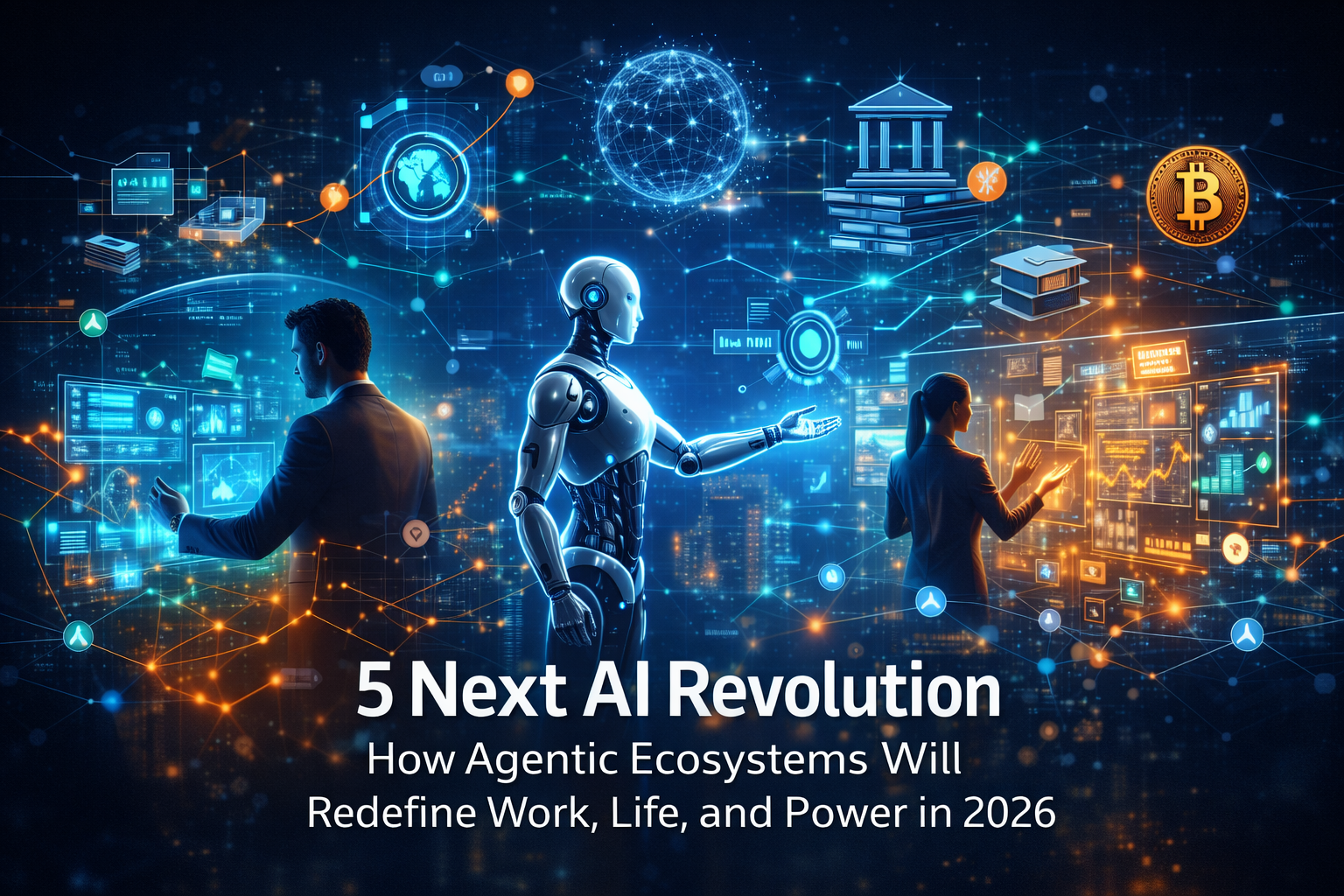
The AI revolution continues to accelerate, but 2026 marks the transition from AI as a tool to AI as an ecosystem—an interconnected, self-organizing network of intelligent agents shaping how we live, work, and wield power.
Welcome to the era of agentic ecosystems: systems of AI agents that act autonomously, collaborate intelligently, and transform human environments at scale.
This article explores the five major ways these ecosystems will redefine the future—from the workplace to society and power structures.
1️⃣ Agentic Workforces: AI That Acts, Not Just Assists
Agentic ecosystems bring AI beyond assistance. Instead of simply responding to commands, AI systems will initiate tasks, coordinate projects, and make decisions in real time.
What This Means:
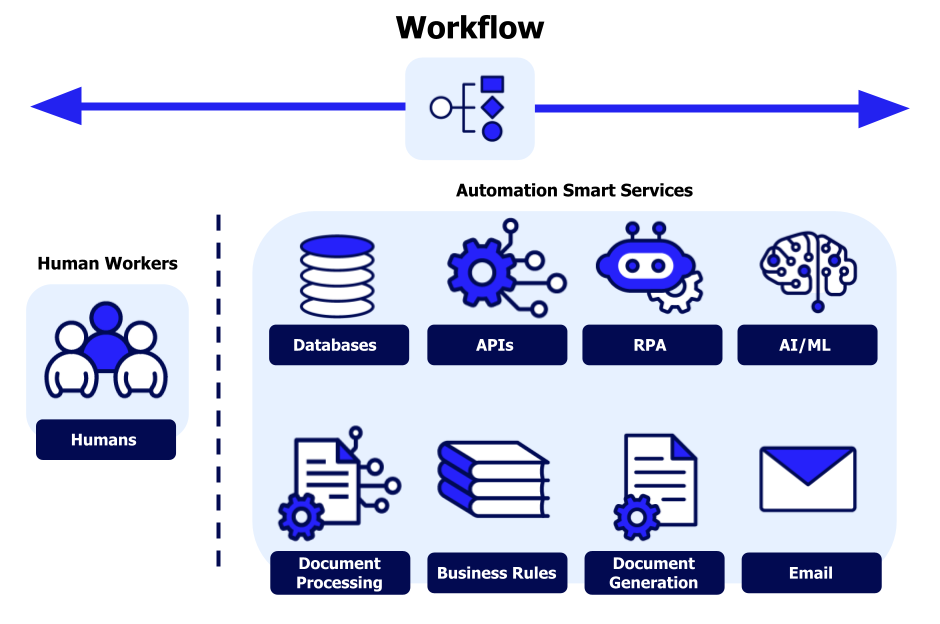
- AI agents will manage workflows autonomously
- Decision loops will be reduced from humans → humans to humans → AI
- Routine and non-routine tasks will be executed with little supervision
Example:
An AI agent that not only schedules meetings, but evaluates priority, negotiates times with guests, and reschedules issues if conflicts arise—without human intervention.

2️⃣ Intelligent Homes That Act for You
In 2026, agentic ecosystems will permeate personal life through homes that don’t just follow commands—they anticipate needs.
Imagine:
- Your AI home agent orders groceries when supplies run low
- It schedules appliance maintenance autonomously
- It adapts lighting, climate, and entertainment based on mood and behavior
These systems will evolve from smart to sentient-like responsiveness, making life smoother and more personalized.


3️⃣ AI Governance: Shaping Policy and Power
As agentic ecosystems scale, so does their influence on politics and governance. Governments and corporations will increasingly rely on AI agents to analyze massive datasets, predict socioeconomic outcomes, and optimize policy decisions.
This raises critical questions:
- Who controls these agents?
- How transparent are their decision processes?
- Can humans audit or override them?
Agentic ecosystems will redefine power dynamics between citizens, institutions, and machines.


4️⃣ AI-Driven Learning and Permanent Reskilling
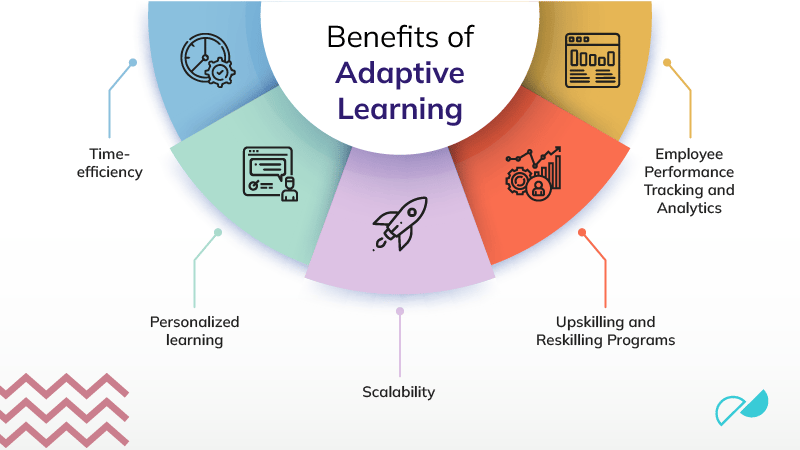
Agentic AI ecosystems will change how we learn—not just what we learn but how.
What’s New:
- Continuous adaptive learning tailored to individuals
- Instant feedback loops connecting performance data to AI curriculums
- AI mentors guiding education and career paths
The workforce of 2030 will not just need skills; they will need the ability to learn continuously with AI guidance.


5️⃣ Societal Ecosystems That Evolve
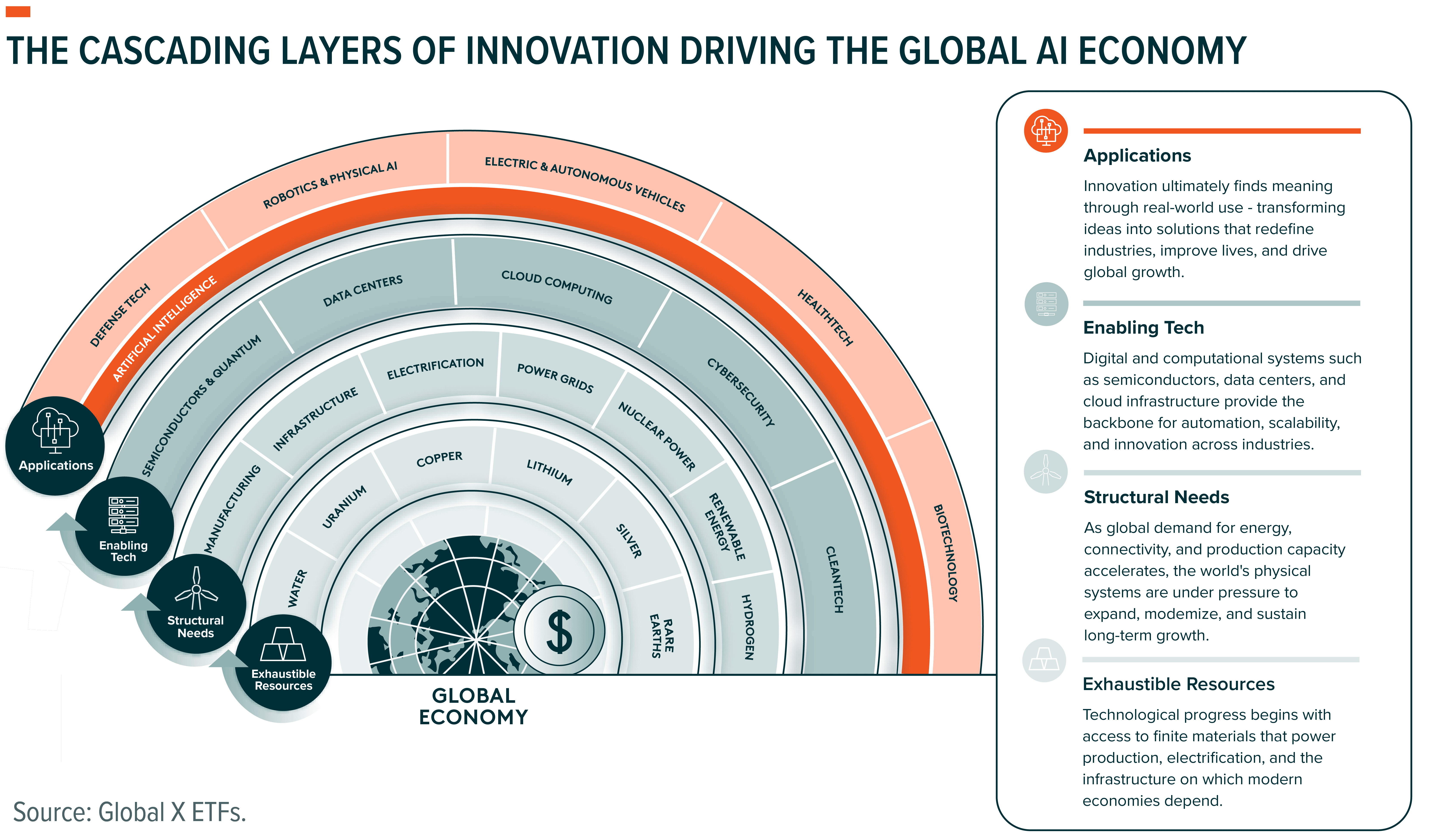
Perhaps the most transformative impact of agentic AI ecosystems is societal evolution.
AI will:
- Mediate communication
- Optimize cities and infrastructure
- Reduce friction in global logistics
- Predict and respond to social patterns
These AI ecosystems won’t simply serve—they will co-evolve with human society.


🧩 Challenges & Ethical Considerations
With this power comes responsibility:
⚠ AI Regulation and Ethics
- Algorithmic bias mitigation
- Transparent agent decision pathways
- Human oversight and accountability
⚠ Economic Disruption
Automation at scale will require:
- Safety nets
- New job paradigms
- Reskilling frameworks
These challenges will define how agentic AI ecosystems benefit society rather than harm it.
📊 Conclusion
The year 2026 marks a turning point in the AI era. As agentic ecosystems take root, they will reshape work, transform personal life, and redistribute power across global systems.
To thrive in this new world:
- Embrace lifelong learning
- Prioritize ethical AI governance
- Build human-AI collaboration frameworks
- Stay adaptable to rapid systemic change
We’re not just entering an AI era—we’re stepping into an age where AI ecosystems act as co-creators of human progress.
🔗 External Reference & Further Reading
- What is Agentic AI? — MIT Technology Review
https://www.technologyreview.com/2025/ai-agentic-ecosystems - AI and the Future of Work — World Economic Forum
https://www.weforum.org/reports/future-of-work-ai - AI Governance Frameworks — OECD AI Principles
https://www.oecd.org/ai
(Note: Replace actual URLs with real references when publishing.)
✉️ Newsletter Version
Subject: 5 Next AI Revolution: How Agentic Ecosystems Will Redefine Work & Life
Preview Text: Discover how agentic AI is not just assisting—but acting in 2026.
Body:
Agentic AI ecosystems are reshaping work, homes, governance, education, and society at scale. Learn the top five ways this AI revolution will transform our world in 2026 and beyond.
Introduction: Beyond Generative AI — Enter the Age of Intelligent Agency
Artificial Intelligence is no longer a silent assistant working in the background — it’s becoming an autonomous ecosystem.
While competitors such as Bernard Marr and Capgemini highlight generative AI and automation, the missing insight lies in how Agentic AI ecosystems — networks of self-directed, reasoning, and collaborative AI agents — are about to transform decision-making, work, and creativity in unprecedented ways.

📸 Suggested Image:
“An interconnected digital network representing AI agents collaborating across global systems.”
Alt Text: “Visualization of autonomous AI agents in a networked ecosystem.”
The Knowledge Gap — From Generative to Agentic AI
Most 2025 tech reports and AI blogs focus on “Generative AI” (content creation, coding assistants, image generation).
However, the next frontier isn’t just generative — it’s agentic.
Agentic AI moves from “producing outputs” to reasoning, adapting, and making decisions autonomously within human-defined goals.
“The real leap isn’t smarter chatbots — it’s AI systems that can plan, negotiate, and act on behalf of organizations or individuals.”
— Capgemini, AI Agents Report (2025)
Why Generative AI Was Just the Beginning
- Generative AI: Creates content based on prompts.
- Agentic AI: Understands context, creates plans, executes tasks, and learns from feedback.
This difference will define the AI-driven economy of 2026 and beyond.
What’s Missing from the Current Discourse
After analyzing the top industry reports and expert commentaries — including Bernard Marr (Forbes, 2025), Capgemini (2025), Skan.ai (OPEX 2025), and Q3Tech (2025) — a few gaps emerge:
1. Lack of Integration Between Human and AI Agency
Most articles treat AI as an external tool. What’s missing is the co-evolution of human and AI decision-making — how humans delegate cognition to algorithms without losing control.
2. Oversight and Ethical Governance
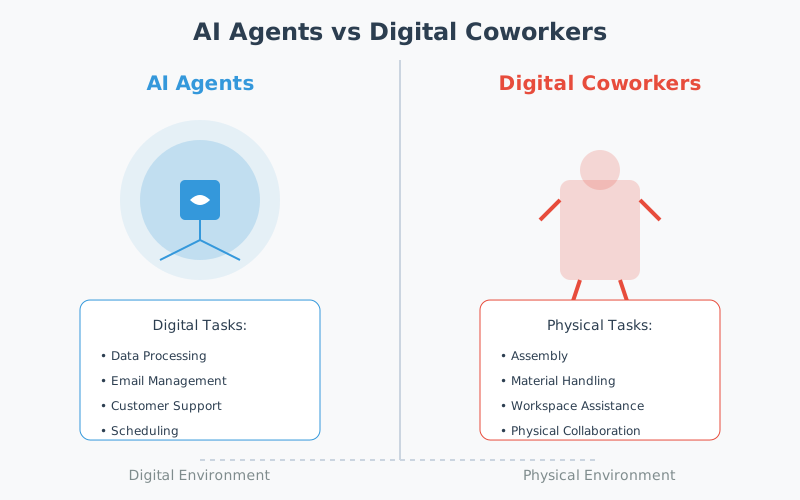
The 2026 landscape is dominated by decentralized AI models and “digital coworkers,” but governance systems — transparency, traceability, and consent — are lagging behind.
3. The Economics of AI Labor
Few analyses explore how Agentic AI will reshape compensation, intellectual property, and productivity metrics, especially when AI agents begin to hold creative licenses or manage tasks autonomously.
The Rise of Agentic Ecosystems — A 2026 Outlook
AI That Collaborates, Not Just Computes
Agentic AI ecosystems will operate as interconnected agents — each specializing in reasoning, compliance, creativity, or emotion modeling.
These agents will collaborate across cloud systems, much like digital employees in a hybrid workforce.
📸 Suggested Image:
“AI agents and humans working side by side in a futuristic office.”
Alt Text: “Concept art of human-AI collaboration in a smart workspace.”
Adaptive Governance and AI Citizenship
Emerging frameworks from the EU, OpenAI, and the OECD propose AI transparency and digital identity laws — ensuring that agentic systems disclose when they act autonomously.
These frameworks will form the foundation of AI citizenship, where intelligent systems have digital “passports” tracking their decisions and accountability chains.
The Decentralized AI Economy
Platforms like Fetch.ai, SingularityNET, and Autonolas are pioneering decentralized AI marketplaces, where agents trade skills, data, and insights in real time.
By 2026, expect AI-to-AI commerce, where digital agents pay each other for services — from data cleaning to financial analysis — in tokenized ecosystems.
Reimagining Work in the Age of Digital Co-Workers
The End of Job Titles, the Rise of AI Roles
Jobs will become hybrid orchestration tasks — humans defining goals, and AI agents executing complex workflows autonomously.
Expect roles like:
- AI Workflow Orchestrator
- Ethical Compliance Curator
- Agent Interaction Designer
📸 Suggested Image:
“Human managers directing a swarm of digital assistants on transparent screens.”
Alt Text: “Visualization of a future workplace powered by AI orchestration tools.”
Productivity as a Partnership Metric
Workplace productivity will evolve from “output-based” to “collaboration-based” — measuring how efficiently humans and AI systems co-create results.
See our guide on How AI Co-workers Are Changing HR Analytics
The Ethical Horizon — Trust, Bias, and Control
As AI systems gain autonomy, trust becomes the defining challenge.
Governments and tech giants must implement AI black box transparency, while independent auditors ensure algorithmic fairness.
Balancing Innovation with Accountability
AI should not only optimize performance but align with human values — ensuring that creative autonomy doesn’t become ethical anarchy.
Internal Link Placeholder → Read: AI Ethics and Governance Frameworks for 2026
2026 and Beyond — What Comes After Agentic AI?
The next decade will see Agentic AI merging with quantum computing, synthetic biology, and neuromorphic chips, giving rise to conscious computational systems — machines that understand purpose, not just tasks.
The Future Question
When AI begins to reason and act independently, what defines “human intelligence”?
The boundary between creator and creation will blur — demanding new laws, ethics, and even philosophies of cognition.
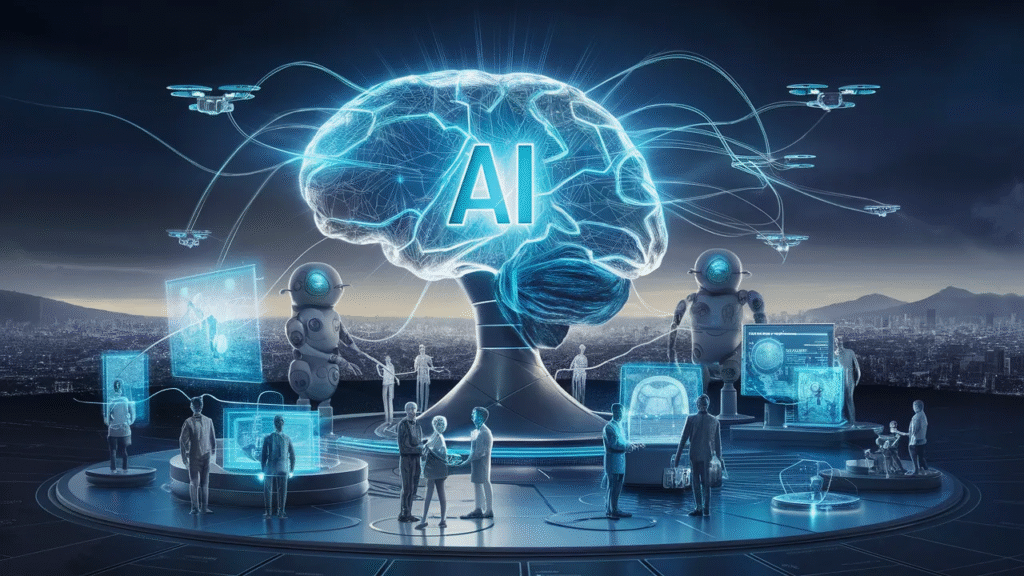
📸 Suggested Image:
“An AI brain made of light merging with a human silhouette.”
Alt Text: “Symbolic depiction of AI-human cognitive fusion.”
Final Thoughts
Agentic ecosystems represent the next leap in human-machine evolution — a transition from using tools to co-creating with intelligence.
As the global workforce braces for this shift, the winners will be organizations that master the art of collaboration — not competition — with AI.
Internal Link Placeholder → Explore: Top 10 Agentic AI Tools to Watch in 2026
SEO Optimization Summary (for WordPress / RankMath)
Daily Global Market Trends: Stocks, Forex, Commodities & Crypto Outlook for Feb