
SMCI Stock Price: Full 2026 Market Analysis, Forecast & Impact on AI, Nasdaq, Gold
The smci stock price has exploded across financial search trends in 2026—and not by accident. Super Micro Computer, Inc. sits at the heart of the global AI boom, making its stock one of the most important indicators for tech markets, semiconductors, and even global risk sentiment.
This is a fully optimized, deep-dive for smci stock price combining top-ranking insights, missing knowledge gaps, and real market implications.
Stocks, Bond and Commodities, Forex Outlook for Today (March 17, 2026)
📊 SMCI Stock Price Today: What the Chart Reveals
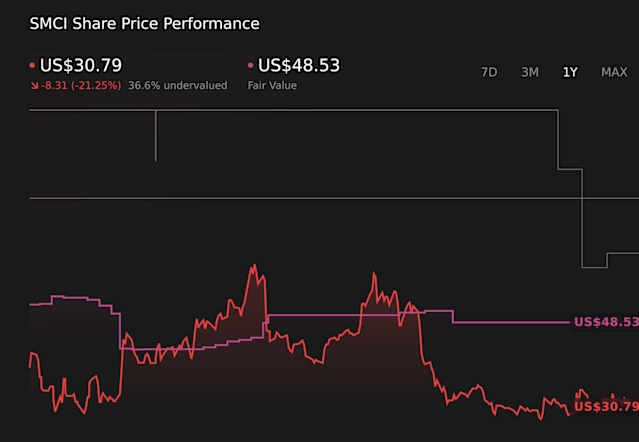
The recent price action of SMCI clearly shows that the stock is undergoing a significant shift in momentum rather than a routine pullback. From the chart, SMCI has experienced a sharp sell-off, declining from above $30 to around the $20 level within a short period. This represents a drop of more than 30%, which is typically associated with heightened market fear, institutional repositioning, and a rapid change in investor sentiment.

This steep decline highlights a fast repricing event rather than a gradual correction. The speed and magnitude of the move suggest that investors are reacting strongly to new information or changing expectations, particularly within the AI-related sector where SMCI has been a major beneficiary.
One of the most notable features of the current chart is the level of short-term volatility. Price swings have become wider within single trading sessions, indicating uncertainty and aggressive participation from both buyers and sellers. Such volatility often appears during key turning points in the market, where sentiment is shifting and traders are adjusting their positions rapidly.
In addition to volatility, the stock is currently exhibiting a clear short-term downtrend. This is evident through the formation of lower highs and lower lows, which is a classic indication of bearish market structure. The inability of the stock to hold key support levels further reinforces the weakness in price action. Until a stable base is formed, the prevailing trend remains downward.

Another critical factor supporting this analysis is trading volume. The recent sell-off has been accompanied by unusually high volume, which strongly suggests the involvement of institutional investors. When large volumes occur during a decline, it often indicates that major market participants are exiting positions, while smaller investors react to the movement. This type of activity is rarely driven by retail traders alone and typically reflects broader strategic shifts among large funds.
Looking at the broader context, SMCI’s decline is closely tied to changing sentiment around artificial intelligence investments. The company has benefited significantly from the AI boom, alongside industry leaders like NVIDIA. However, the market is now beginning to question whether current valuations are justified by actual earnings and profitability.
There is a growing concern that AI-related stocks may have been overvalued based on future expectations rather than present financial performance. As a result, investors are becoming more cautious, leading to a rotation away from high-growth, high-expectation stocks into more stable or undervalued assets. This shift in sentiment is contributing to the sharp decline observed in SMCI.

For traders, this environment presents both risks and opportunities. Short-term traders are facing a clearly bearish trend, making it risky to buy into the stock without confirmation of a reversal. The strategy of “buying the dip” can be particularly dangerous in strong downtrends, where prices may continue falling beyond expectations.
Swing traders, on the other hand, may look for potential support zones, particularly in the $18 to $20 range, while watching for signs of reversal such as double bottoms or bullish divergences. Patience is crucial, as entering too early can lead to losses if the downtrend persists.
For long-term investors, the situation requires a broader perspective. The current decline could represent a healthy correction within a strong long-term growth story, or it could signal the beginning of a deeper valuation adjustment. The key factor will be whether the underlying demand for AI infrastructure continues to grow and translate into sustainable profits.

Overall, the movement in SMCI reflects a larger shift in the market from hype-driven enthusiasm to a more cautious, fundamentals-based approach. Until buyers regain confidence and step in with strong demand, the stock is likely to remain under pressure or move sideways as it searches for a stable base.
🧠 What Is SMCI and Why It Matters
Super Micro Computer, Inc. is a leading manufacturer of:
- AI servers
- High-performance computing systems
- Data center infrastructure
Its ecosystem is tightly linked with:
- NVIDIA
- Advanced Micro Devices
👉 This makes SMCI a “middle-layer AI company”—not designing chips, but enabling AI deployment.

🚨 Breaking News Driving SMCI Stock Price (2026)
The latest developments surrounding SMCI reveal a complex and evolving narrative that goes far beyond simple price movements. At first glance, the company appears to be benefiting from one of the strongest technological waves in history—artificial intelligence. However, beneath the surface, several powerful forces are simultaneously pushing the stock in opposite directions.
One of the most important drivers is the continued explosion in AI demand. Across the globe, data center expansion is accelerating at an unprecedented pace as companies invest heavily in AI infrastructure. From cloud computing giants to enterprise-level platforms, the need for high-performance servers continues to grow rapidly. This surge in demand has positioned SMCI as a key supplier in the AI ecosystem, since it builds and delivers the physical server infrastructure required to run advanced AI workloads.

At the same time, however, a less visible but equally critical issue is emerging—shrinking profit margins. While demand for AI servers is increasing, these products tend to generate lower margins compared to traditional enterprise hardware. Pricing pressure is intensifying as customers demand more cost-efficient solutions, and competitors aggressively position themselves to capture market share. As a result, SMCI is generating more revenue, but not necessarily more profit.
This dynamic has contributed to a sharp stock correction, with SMCI falling more than 30% within a short period. Importantly, this decline is not being driven by a drop in demand. Instead, it is being triggered by growing concerns over profitability and long-term valuation. This distinction is crucial, yet often overlooked by many market analyses.
📉 Why SMCI Stock Price Is Falling Despite Strong Growth
The decline in SMCI’s stock price, despite strong top-line growth, highlights a fundamental disconnect that many investors initially fail to recognize. Revenue growth does not automatically translate into profit growth, and this gap is becoming increasingly evident.
Although SMCI continues to report strong revenue figures, the costs associated with delivering AI infrastructure are rising significantly. Components, logistics, and integration expenses are all contributing to margin compression. Additionally, as competition intensifies, the company faces pressure to lower prices in order to remain competitive. This creates a situation where sales increase, but profitability weakens, ultimately affecting investor confidence and stock valuation.
Another major factor influencing SMCI’s performance is its dependency on NVIDIA. The company relies heavily on NVIDIA’s GPUs, which are essential components in AI servers. This reliance creates a structural vulnerability. Because SMCI does not control the production or pricing of these chips, it has limited ability to influence its own cost structure. Any disruption in NVIDIA’s supply chain or pricing strategy can directly impact SMCI’s margins and operational efficiency.
Furthermore, the competitive landscape is becoming increasingly challenging. Established players such as Dell Technologies and Hewlett Packard Enterprise are aggressively expanding their presence in the AI server market. These companies benefit from longstanding enterprise relationships, broader product ecosystems, and the ability to offer competitive pricing. As a result, SMCI is under constant pressure to maintain its market share while protecting its already thin margins.
📊 Macro Market Context: What the Broader Market Is Signaling
To fully understand SMCI’s price movement, it is essential to view it within the broader macroeconomic and market context. The stock does not operate in isolation; rather, it is deeply interconnected with global financial trends.
Gold, often considered a safe-haven asset, tends to rise during periods of increased market uncertainty. When technology stocks, including SMCI, experience volatility or decline, investors frequently rotate into safer assets like Gold. This inverse relationship can serve as an early warning signal of shifting market sentiment.

Similarly, SMCI shows a strong correlation with the Nasdaq Composite, which represents the broader technology sector. Weakness in SMCI often reflects or even anticipates weakness across tech stocks, particularly those linked to AI and cloud infrastructure.
Another critical reference point is NVIDIA itself. As the leading force in AI chip design, NVIDIA effectively sets the pace for the entire AI ecosystem. When NVIDIA’s stock rises while SMCI declines, it sends a clear message: the market is rewarding high-margin technology owners while penalizing lower-margin infrastructure providers. This divergence highlights the structural differences between companies that create core technology and those that assemble and deploy it.
🔍 The Biggest Knowledge Gap: SMCI Is an AI Enabler, Not a Leader
One of the most significant misconceptions in the market is the classification of SMCI as a primary AI “winner.” In reality, the company operates as an AI enabler rather than a technology leader.
Unlike NVIDIA, which designs and controls high-value semiconductor technology, SMCI focuses on assembling and delivering server systems. This distinction has profound implications for profitability and valuation. Technology creators typically enjoy higher margins and stronger pricing power, while hardware assemblers operate in more competitive environments with tighter margins.

Understanding this difference is essential for investors. Treating SMCI as equivalent to NVIDIA leads to unrealistic expectations and misinformed investment decisions. The company plays a vital role in the AI ecosystem, but its position inherently limits its profit potential compared to companies that own the underlying technology.
⚠️ Why This Matters for Investors
The implications of this structural positioning are significant. High revenue growth alone is not sufficient to sustain long-term stock performance. Profit margins, cost control, and competitive positioning ultimately determine valuation.
SMCI’s vulnerability to price competition and its reliance on external suppliers place it in a challenging position. As the market becomes more mature and competitive, companies with stronger control over their value chains are likely to outperform those with less pricing power.
📈 SMCI Stock Price Forecast (2026–2027)
Looking ahead, the future of SMCI’s stock price depends on how these competing forces evolve. In a bullish scenario, continued growth in AI demand, rapid data center expansion, and increased global cloud spending could drive the stock higher, potentially delivering gains in the range of 20% to 40%.
In a bearish scenario, however, ongoing margin compression, intensifying competition, and a broader market rotation away from high-growth AI stocks could push the stock lower by a similar magnitude. The balance between demand growth and profitability will ultimately determine which scenario unfolds.
🌍 How SMCI Stock Price Affects the Global Financial Markets
SMCI’s influence extends beyond its own performance, serving as a key indicator within the global financial system. In the AI and technology sector, the company acts as a proxy for infrastructure demand. Strong performance suggests robust investment in AI and cloud computing, while weakness signals potential concerns about sustainability and profitability.
In the semiconductor industry, SMCI provides indirect insights into chip demand. Because it relies heavily on GPUs, strong performance indicates high demand for semiconductor components, while weakness may suggest pressure within the hardware supply chain.
More broadly, SMCI also reflects overall market sentiment. Rising prices typically indicate increased risk appetite and optimism, while declining prices suggest caution and a reassessment of growth expectations.
🧠 Technical Analysis: Current Market Structure
From a technical perspective, SMCI is currently in a bearish short-term trend. The stock has established resistance around the $30 level and is finding tentative support near $20. Following its sharp decline, the stock appears to be entering a consolidation phase, where prices may stabilize before the next major move.
This phase is critical, as it often determines whether the stock will recover or continue its downward trajectory.
💡 Investment Strategy: Advanced Insights
For short-term traders, the current environment offers opportunities driven by volatility. Price swings can be significant, particularly around earnings announcements and major news events. However, risk management is essential due to the unpredictable nature of the trend.
For long-term investors, the focus should shift away from revenue growth and toward profitability metrics. Monitoring SMCI’s margins, cost structure, and dependency on NVIDIA is crucial for making informed investment decisions.
🔗 External Resources for Deeper Research
To gain a deeper understanding of SMCI and track its performance, investors can explore the following resources:
- Yahoo Finance for real-time stock data and financials
- Nasdaq for official listings and disclosures
- Super Micro Computer investor relations for company updates
📝 Final Verdict: Is SMCI Stock Worth It?
The current trajectory of SMCI makes it one of the most important indicators in the evolving AI economy. While demand for AI infrastructure remains strong and continues to grow, profitability challenges and competitive pressures cannot be ignored.
Ultimately, SMCI represents more than just a stock—it serves as a real-time barometer of the balance between technological hype and financial reality. Investors who understand this distinction will be better positioned to navigate the opportunities and risks associated with the rapidly changing AI landscape.
📝 Conclusion
The SMCI stock price tells a deeper story about the modern AI economy:
- 🚀 Explosive demand
- ⚠️ Weak margins
- 🔄 Intense competition
👉 This makes SMCI one of the most important “reality check stocks” in the AI boom.
🔗 External Resources
- SMCI Investor Relations (Official Earnings)
- Yahoo Finance SMCI Stock Page
- SMCI Forecast & Analysis
- Weekly Forex Outlook: Key Levels, Macro Drivers & What Traders Should Watch (Week of Mar 1–Mar 7, 2026)
- Global Markets Shake over Trumps reaction on Iran: Tensions Threaten Oil Supply: Stocks Fall, Gold and Crude Surge (March 4, 2026)
- Oil Shock Fears Rock Global Markets as Trump-Iran Crisis Escalates — Stocks, Gold and Forex React