

Stock Market Today (March 10, 2026): Stocks Rebound, Gold Holds Firm, Oil Pulls Back
Global financial markets are entering Tuesday with a more balanced tone after one of the most volatile stretches seen in recent sessions. Investors across equities, commodities, and currency markets are reassessing risk after geopolitical headlines triggered a powerful surge in oil prices earlier in the week. The central story continues to revolve around tensions in the Middle East, where fears that the conflict between the United States, Israel, and Iran could disrupt global oil supply initially sent markets into defensive mode.
Those fears triggered sharp reactions across asset classes. Oil prices surged dramatically, gold rallied as investors sought safety, and global equities experienced sudden volatility. However, sentiment improved after comments from former U.S. President Donald Trump suggested that the conflict might move toward de-escalation. Markets interpreted those remarks as a sign that the worst-case scenario of a prolonged regional conflict might not materialize immediately.
Bonds, Commodities, and Forex News Today — March 9, 2026
As a result, the financial landscape on March 10 reflects a partial reset. Oil prices have pulled back from their extreme highs, stock markets are stabilizing, and gold is consolidating near elevated levels. However, traders remain cautious. Iran has stated that its oil blockade could continue until military attacks cease, meaning the possibility of renewed supply disruptions has not completely disappeared.
The market today is therefore not driven by pure optimism or pure fear. Instead, it is being shaped by a delicate balance between geopolitical risk, economic fundamentals, and investor positioning. That combination is creating sharp moves across asset classes and ensuring that traders remain extremely sensitive to new headlines.
Global Stocks Stabilize After Oil Shock

The most immediate story in the equity market is the rebound that followed Monday’s oil shock. When crude prices surged toward extreme levels earlier in the week, investors reacted by selling stocks that were most exposed to rising energy costs. Transportation companies, airlines, manufacturing firms, and consumer-dependent industries were among the first to feel the pressure.
The reason is straightforward. Rising oil prices function like a tax on the global economy. Higher energy costs increase transportation expenses, raise production costs for manufacturers, and eventually feed into higher consumer prices. When that happens, central banks may be forced to keep interest rates higher for longer in order to prevent inflation from accelerating again.
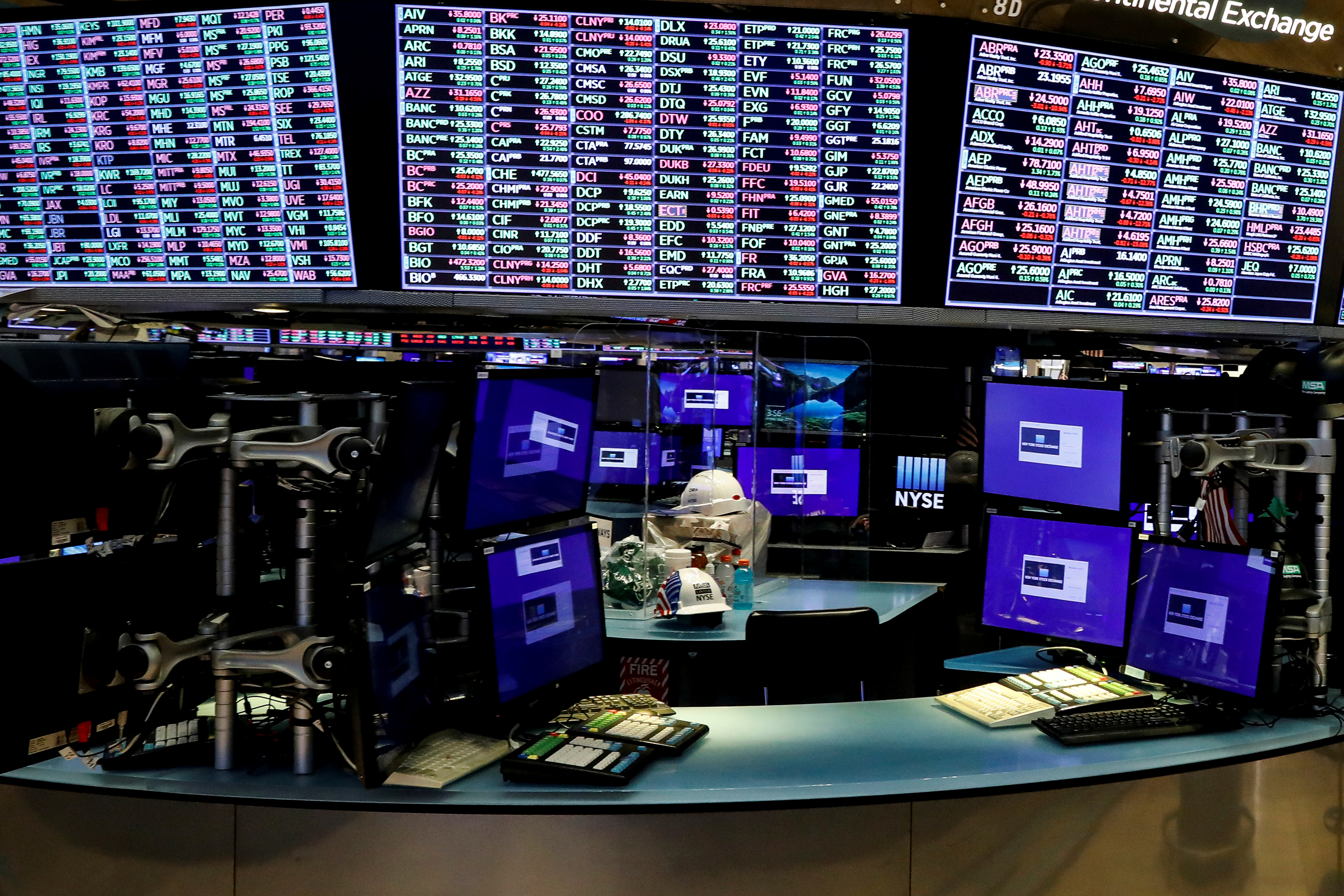
That dynamic creates a challenging environment for stocks because higher interest rates reduce the present value of future earnings. As a result, when oil surged earlier in the week, many investors immediately began pricing in the possibility that global inflation could re-accelerate.
However, when crude prices pulled back during Tuesday’s session, some of that pressure eased. Investors who had aggressively reduced risk positions began re-entering equity markets, leading to a rebound in major indices.
The recovery is visible across global markets. Asian stocks moved higher overnight as investors responded to the decline in oil prices. European markets followed with moderate gains, and U.S. futures signaled a stabilizing opening for Wall Street.
Despite the rebound, traders are not yet convinced that volatility is over. Instead, the current move is widely seen as a relief rally rather than the beginning of a sustained bullish trend.
Oil Prices Pull Back After Massive Volatility
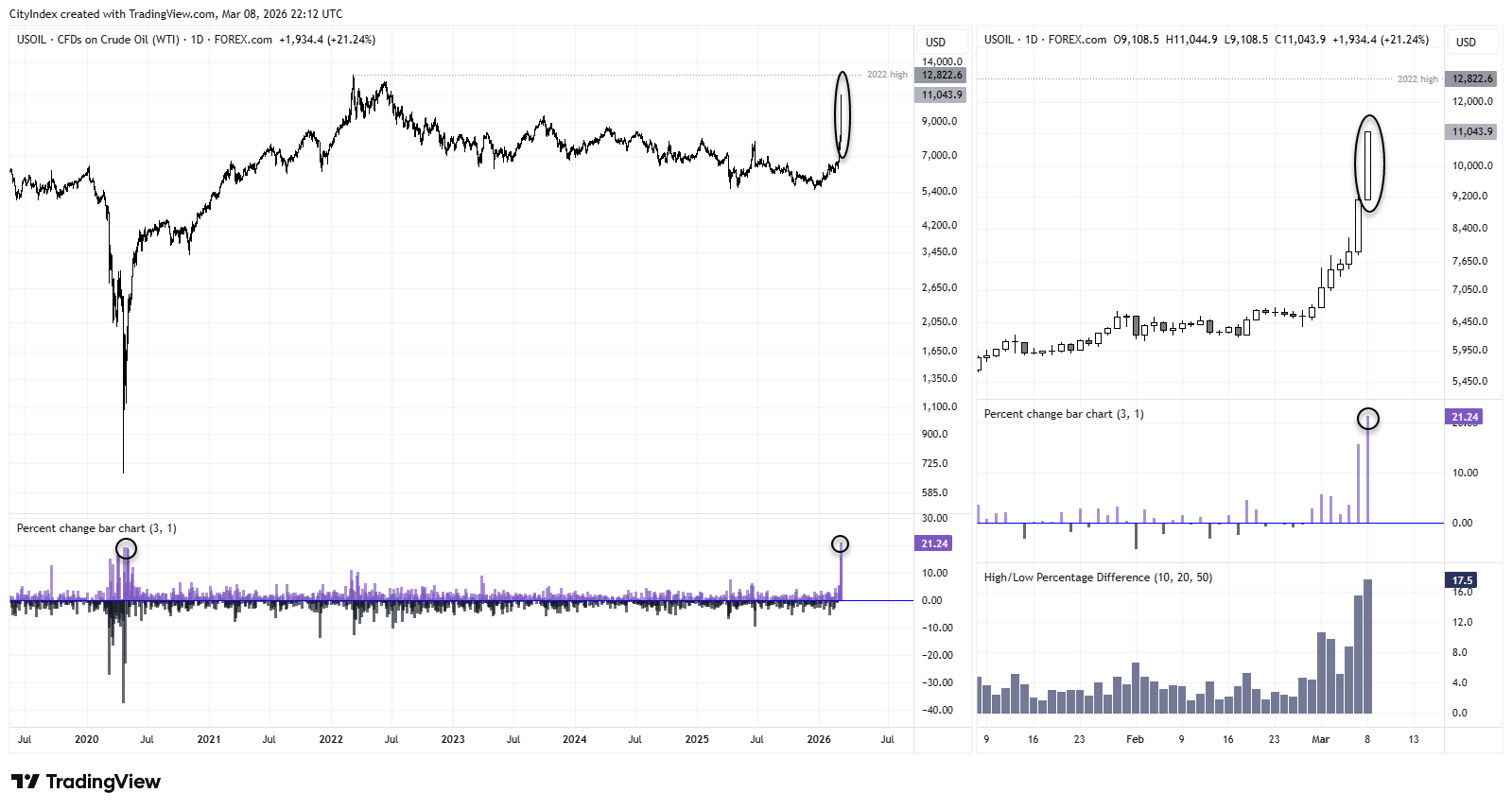
Oil prices remain the single most important driver of global financial markets today. Earlier in the week, crude experienced one of its most dramatic intraday moves in recent years. Prices surged toward the $120 per barrel level before collapsing sharply below $90 as traders reacted to rapidly changing geopolitical developments.
The initial surge occurred after reports that Iranian forces were threatening to block critical shipping routes in the Middle East. Because a large portion of the world’s oil supply passes through the Strait of Hormuz, even the possibility of disruption immediately triggered panic buying in the energy market.
Traders feared that any sustained interruption could remove millions of barrels of oil per day from the global supply chain. Such a disruption would likely trigger a significant inflation shock worldwide.
- Oil falls over 6% as Trump predicts Middle East de‑escalation
- Oil prices slide as Trump signals Iran war may end soon
- Crude oil prices tank after Trump signals conflict could end soon
However, sentiment shifted after political statements suggested that the conflict could move toward a diplomatic resolution. Markets quickly reassessed the probability of a full-scale supply disruption, leading to a sharp reversal in oil prices.
Even with the decline, crude remains extremely sensitive to geopolitical headlines. Any sign that tensions are escalating again could trigger another rapid rally. Conversely, continued diplomatic progress could push prices further downward as traders unwind the panic buying that occurred earlier in the week.
Because energy prices affect nearly every industry, the oil market is effectively acting as the central hub of global market sentiment.
Gold Remains Elevated as Investors Seek Safety

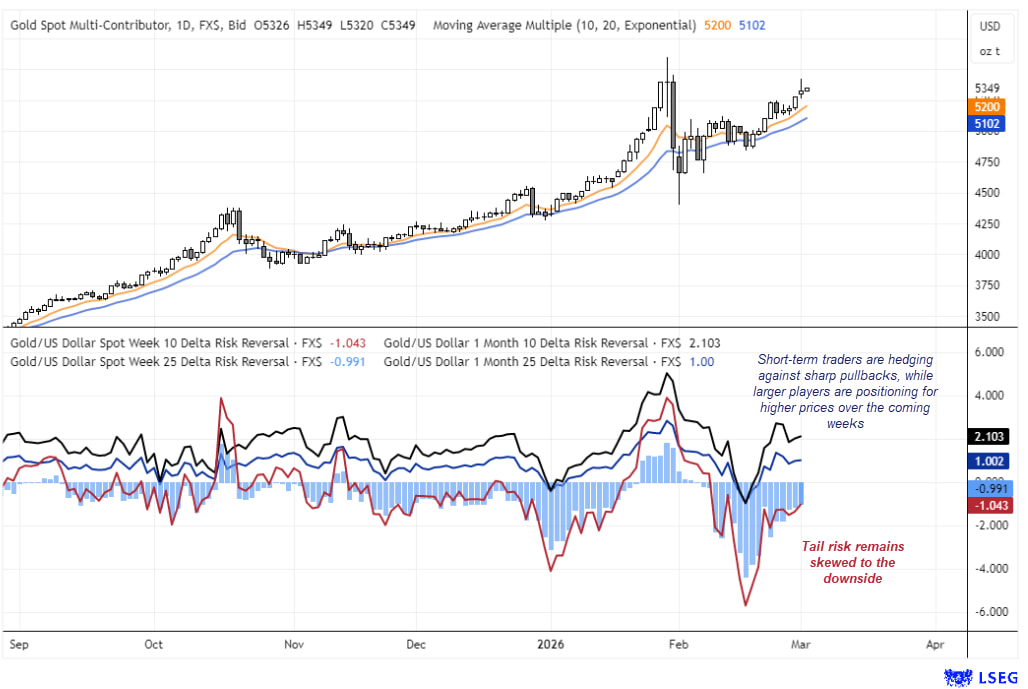
While oil prices have retreated from their highs, gold continues to hold firm near elevated levels. The precious metal has long served as one of the world’s most important safe-haven assets. When geopolitical risk rises or financial markets become unstable, investors often shift capital into gold as a store of value.
- Gold prices rise but remain range‑bound amid Iran conflict uncertainty
- Gold and silver rebound as investors react to geopolitical tensions
- Gold steady as markets watch Middle East developments
Gold prices remain close to the upper end of their recent trading range, reflecting the ongoing uncertainty surrounding the geopolitical situation. Traders are reluctant to abandon defensive positions completely because the conflict in the Middle East has not been resolved.
Another factor supporting gold prices is the broader macroeconomic environment. In recent years, central banks around the world have increased their gold reserves as part of a strategy to diversify away from reliance on the U.S. dollar. That structural demand has provided a strong long-term foundation for the gold market.
At the same time, gold is facing a balancing force. If oil prices were to remain elevated for an extended period, inflation expectations could rise. In response, central banks might maintain tighter monetary policy, which could strengthen the U.S. dollar and create headwinds for gold.
This combination of supportive and restrictive forces explains why gold is currently consolidating rather than accelerating sharply upward. Investors are hedging against geopolitical risk but also waiting for clearer signals about global monetary policy.

Technology Stocks Continue to Drive Market Sentiment

Beyond energy and geopolitics, another major force shaping the stock market today is the technology sector. Large-cap technology companies continue to dominate global equity indices, meaning their performance can significantly influence overall market direction.
Recent reports indicating that Apple has shifted roughly 25 percent of its iPhone production to India highlight the ongoing transformation of global supply chains. Technology companies are increasingly diversifying their manufacturing operations away from China in order to reduce geopolitical and trade-related risks.

For investors, these strategic shifts carry important implications. Companies that successfully adapt their supply chains may be better positioned to withstand geopolitical disruptions. That resilience can make them more attractive to long-term investors.
At the same time, the technology sector remains deeply tied to the artificial intelligence boom. AI investment continues to attract massive capital flows, and announcements related to AI development can move markets quickly.
One notable development today involves reports that a startup backed by prominent AI researcher Yann LeCun has raised more than $100 billion to pursue alternative artificial intelligence approaches. Large investments like this reinforce the idea that AI will remain one of the most powerful drivers of technology stock valuations.

Because major stock indices such as the Nasdaq are heavily weighted toward technology companies, developments in this sector often shape the direction of the broader market.
Currency Markets Reflect Mixed Global Sentiment

4
The foreign exchange market is also reacting to the evolving geopolitical and economic landscape. Currency movements today reflect a mixture of risk appetite, commodity price fluctuations, and macroeconomic data releases.
Commodity-linked currencies such as the Australian dollar and Canadian dollar often move in response to changes in energy and metals prices. When oil prices surge, the Canadian dollar typically strengthens because Canada is a major oil exporter. Conversely, when oil prices fall, that support can weaken.
Safe-haven currencies such as the Japanese yen and Swiss franc tend to strengthen during periods of global uncertainty. These currencies benefit from capital inflows as investors seek stability.
Meanwhile, the U.S. dollar remains a central force in global currency markets. Because the dollar functions as the world’s primary reserve currency, it often strengthens during periods of financial stress.
Today’s forex performance reflects a mixed environment. Investors are cautiously moving back toward risk assets as oil prices decline, but lingering geopolitical uncertainty continues to support defensive currency positions.
Airline Industry Reacts to Rising Fuel Costs
Another interesting development in today’s market involves the airline industry. Rising fuel costs earlier in the week forced several airlines to begin increasing ticket prices in order to offset higher operating expenses.
Jet fuel represents one of the largest costs for airlines. When oil prices rise sharply, profit margins can quickly shrink unless companies pass those costs on to consumers.
Some airline stocks initially fell as investors reacted to the higher cost environment. However, prices stabilized later as crude oil retreated. This pattern illustrates how closely certain industries are tied to energy prices.
If oil prices were to rise again, airline stocks could face renewed pressure. On the other hand, if crude stabilizes near current levels, the sector may gradually recover.
Key Economic Data Influencing Markets
In addition to geopolitical developments, several economic indicators released this week are shaping investor expectations.
Data from China showed slightly stronger inflation readings than economists expected. That could indicate improving demand within the world’s second-largest economy, which would be positive for global growth.
However, economic data from Germany painted a more concerning picture. Industrial production and factory orders both fell more than anticipated, highlighting ongoing weakness in Europe’s manufacturing sector.
This divergence between Chinese and European economic performance adds another layer of complexity to global markets. Investors must evaluate whether stronger Asian demand can offset slowing European industrial activity.
What Could Move Markets Later Today
Several key factors will likely determine market direction during the remainder of the trading session.
The most important factor remains geopolitical headlines. Any update related to the conflict involving Iran, the United States, and Israel could quickly move oil prices and trigger reactions across stocks, currencies, and commodities.
- Iran says oil blockade will continue until attacks end
- Economic impact of the 2026 Iran war on global markets
- Strait of Hormuz crisis and its impact on global energy supply
Another factor is political commentary. Markets are closely monitoring statements from policymakers, particularly those related to energy policy, military developments, and economic strategy.
Economic data releases will also play a role. Investors are watching inflation indicators, manufacturing surveys, and consumer confidence reports to gauge the health of the global economy.
- Investing.com market analysis and financial news
- https://www.forexfactory.com/calendar
- https://finviz.com/news.ashx
- https://finviz.com/forex_charts.ashx
- https://finviz.com/forex_performance.ashx
Finally, technical trading levels may influence market movements. Many traders rely on support and resistance levels to guide their decisions, and those thresholds can amplify price swings when they are breached.
Market Outlook
As of March 10, 2026, global markets are in a transitional phase. The initial shock from the oil surge has faded, but the underlying risks have not disappeared.
Stocks are stabilizing because crude oil has retreated from extreme levels. Gold remains elevated because geopolitical uncertainty persists. Oil itself continues to trade in a highly volatile range as traders assess the likelihood of supply disruptions.
The coming days will likely determine whether the current rebound evolves into a broader market recovery or simply represents a temporary pause in a period of heightened volatility.
For investors, the key takeaway is that markets remain extremely sensitive to geopolitical developments. In the current environment, headlines can move asset prices within minutes, and cross-market relationships between oil, gold, currencies, and equities are stronger than usual.
If tensions ease further, risk assets such as stocks could extend their rebound. If the conflict intensifies again, defensive assets like gold and safe-haven currencies may regain momentum.
Either way, March 10 stands as another reminder that global markets are deeply interconnected and increasingly influenced by geopolitical forces as well as economic fundamentals.
- Asia stocks rebound as oil retreats and Iran war fears ease
- Wall Street rebounds as hopes of Iran conflict resolution grow
- Markets wrap: oil surge and geopolitical tensions shake stocks
Check also our latest Articles
Oil Shock Fears Rock Global Markets as Trump-Iran Crisis Escalates — Stocks, Gold and Forex React